A year of LingQ
A year ago I was stuck trying to read 『また、同じ夢を見ていた』. It is not a long book. I was still painfully looking up many words in a separate app, and because that was a miserable experience my progress was very slow. I began to wonder if I would ever be able to read it, or anything.
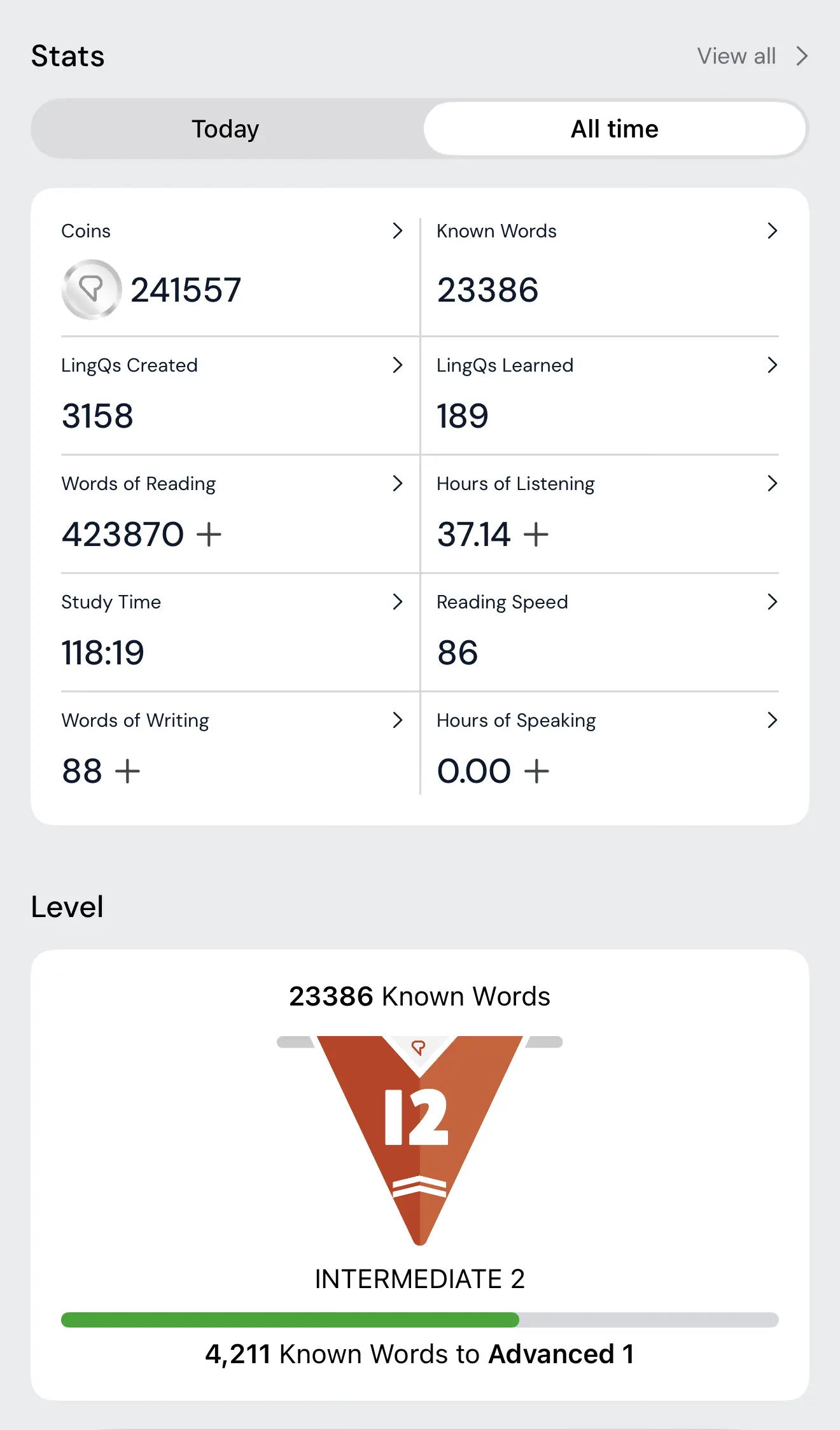
I have finished it now. I have also read 『コンビニ人間』 and 『時をかける少女』 all the way through, and I am a good way into 『コーヒーが冷めないうちに』. Alongside the books I have listened to, and read the transcripts of, more than 300 episodes of Japanese with Noriko: Season 1.
The useful change is not the list. I can get through a lot of text now without stopping. Songs will sometimes come through as a whole verse, occasionally a whole track. I have watched a few dramas outside any app; depending on the subject they are followable without subtitles. Japanese television in the background is a mixed bag. Adverts I understand most of. A news programme or a proper show still varies wildly depending on the topic.
Something has also happened with kanji I have not seen before. I will get a sense of the meaning, and sometimes the reading, without being able to say why. The first time I saw 霊柩車 I somehow correctly guessed the pronunciation — I have no idea how, other than the final kanji.
The method was not complicated. I used LingQ and Anki for daily practice. LingQ can export a list of words you do not know. I have an LLM turn those into definitions and example sentences, and then I import into Anki, and that is the queue I actually drill. Most days I listen to one or two podcast episodes. On days where I commute I tend to read several pages of the current book I’m reading instead.
I am a bit of a completionist, so when I first got the app I went through all of their mini-stories in about a week. They’re quite good if you’ve already had some exposure to the language, and they progress in difficulty.
After a year the app clearly works. I do not have a long list of complaints — though there are a few niggles:
- Words that wrap are easy to miss. If a single character sits at the end of a line and you tap slightly wrong, you turn the page, and every unknown word on the page you just left is marked as known. You can fix it at the end of the lesson, but you shouldn’t have to — and for books the end of the lesson can be quite some time away.
- Segmentation is not always clean. Sometimes a whole fragment of a sentence is treated as one word, and it is not obvious whether to discard it or mark it known — but either way I don’t want to mark it as unknown and pollute my wordlist with sentence fragments.
- Podcasts with a transcript will occasionally drift. The highlighting loses the audio, and if the transcript ends a minute early the audio just dies. You have to find your place again. Infuriating, but rare — definitely not a deal breaker for the value I gain from it (but if you’re reading this LingQ engineer — please fix 😅).
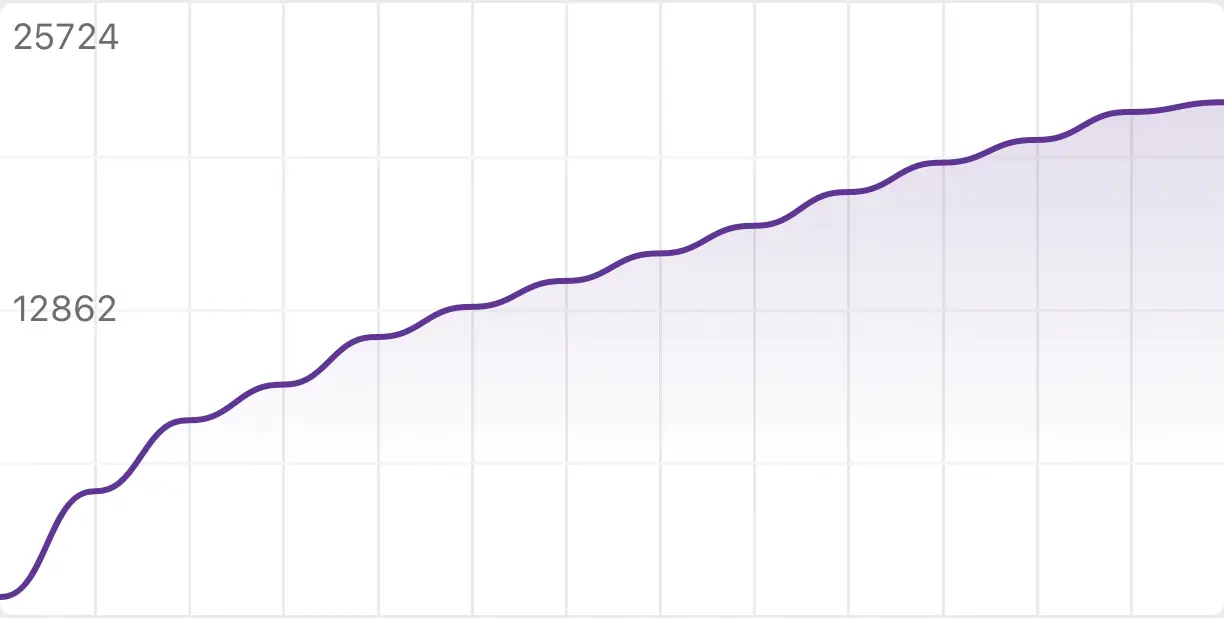
If I were starting the year over I would read more. It takes longer but the gains are larger. The podcasts are easy to keep doing, and they clearly did something, but the books are where really huge improvements are made. Would I recommend LingQ? Yes. The progress speaks for itself.
| Benzoate | benzoate.net | 16 Aug 2026 |